TECHNOLOGY
THE SKIN IS
THE STRUCTURE.
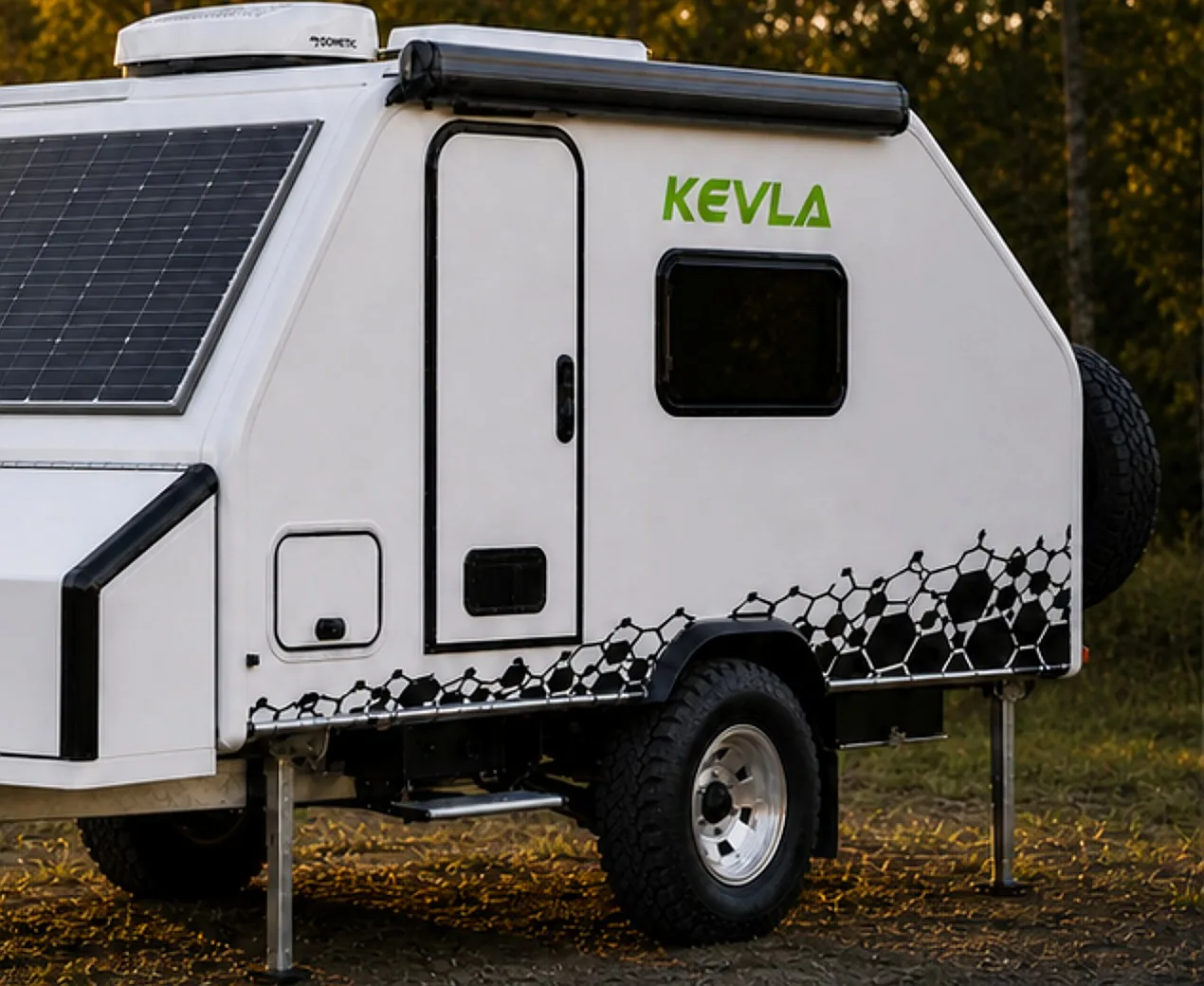
A monocoque has no frame hiding behind the wall. The composite shell carries the loads, insulates the interior and forms the outer surface, all at once.
01 / CONSTRUCTION
MOULDED,
NOT ASSEMBLED.
Conventional caravans start with a frame. Panels are fixed to it, then every joint between those panels is sealed. The sealant is what keeps the weather out, and sealant is what ages.
A monocoque removes the frame and most of the joints. What remains is a continuous shell that spreads load across its whole surface.
SHELL CROSS-SECTION
- 01GELCOATUV-stable outer skin
- 02CARBON FIBREStiffness and torsional control
- 03STRUCTURAL COREInsulation and rigidity
- 04KEVLARImpact and abrasion resistance
- 05INNER SKINSealed interior surface
PLACEHOLDER · Laminate schedule and layer order to be confirmed by manufacturer.
02 / MATERIALS
TWO FIBRES,
TWO JOBS.
Aramid and carbon behave differently under load. Used together they cover each other’s weaknesses.
-
MACRO · ARAMID 01 / KEVLAR
TOUGHNESS
Aramid fibre absorbs energy instead of shattering. It answers gravel, branches and corrugations.
-
MACRO · CARBON 02 / CARBON FIBRE
STIFFNESS
Carbon resists deflection. It keeps the shell from twisting, which protects everything mounted to it.
-
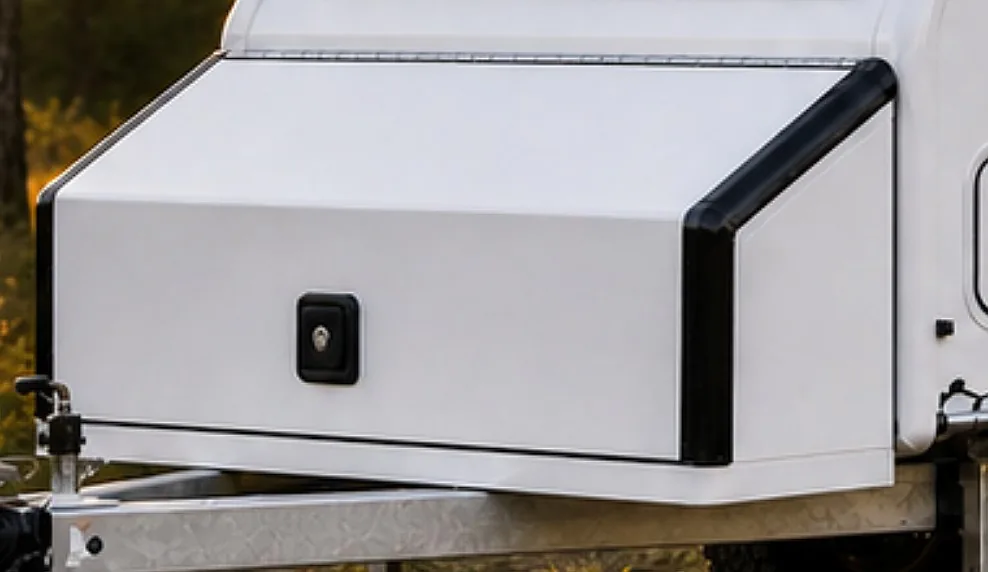
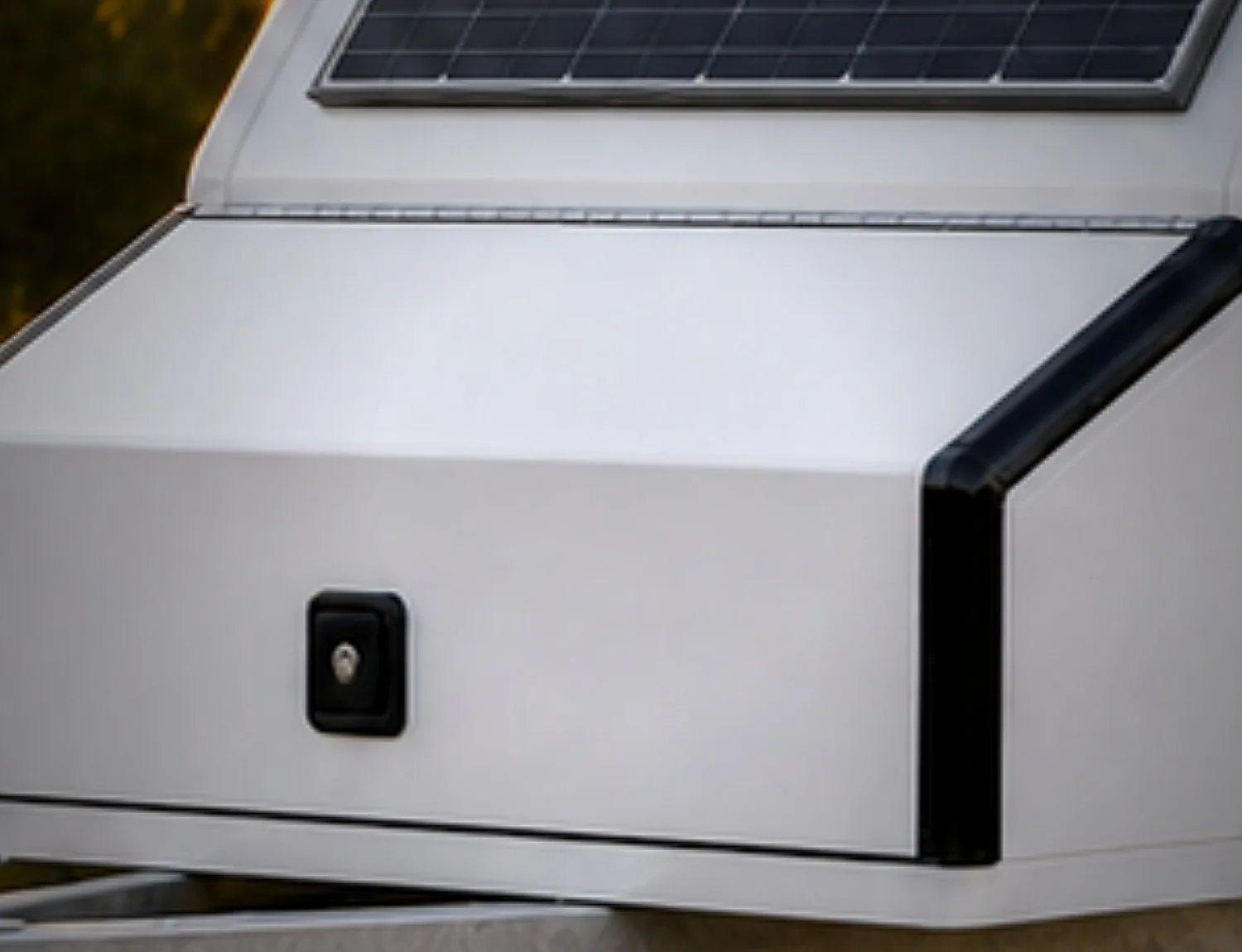
DETAIL · MOULDED NOSE 03 / MONOCOQUE
CONTINUITY
One shell instead of a frame plus panels. Fewer joints to seal, fewer paths for water and dust.
03 / HOW IT IS BUILT
FIVE STAGES.
-
TOOLING
The shell shape is cut as a mould before any material is laid.
-
LAY-UP
Kevlar and carbon are placed by hand in the orientation each load runs.
-
CURE
The laminate cures into a single rigid structure.
-
BOND
Shell meets chassis. Apertures for door, window and services are cut and sealed.
-
FIT-OUT
Power, water, storage and interior go in. Then it gets tested.
INDICATIVE PROCESS — to be confirmed against the manufacturer’s actual build sequence before publishing.